
Pasta water is an ingredient
Why the cloudy water you've been pouring down the drain is the difference between pasta with sauce and pasta in sauce.
By Jarrett Kahler
The most important ingredient in most good pasta dishes never makes it onto the shopping list. It's the water the pasta cooked in. Most people pour it down the sink, then wonder why their sauce sits on the noodles instead of clinging to them.
What's actually in it
As pasta cooks, it sheds starch into the water. That cloudy, slightly thick water does two jobs. The starch acts as a binder, helping fat and water hold together in a smooth sauce instead of separating into a greasy puddle. And because you salted the pot, it seasons the sauce as it goes in.
It's the same idea as mounting a pan sauce with butter, just with starch doing part of the work.
Salt the water properly
If the pasta water is bland, the pasta is bland, and no amount of salt on top fixes it. You'll hear "salty like the sea," which is far saltier than anyone actually cooks with. A good working rule is about two tablespoons of kosher salt per gallon of water. Taste it. It should taste pleasantly seasoned, like a light broth.
Finish the pasta in the pan
This is the habit that changes everything. Instead of draining the pasta and spooning sauce over it on the plate:
- Scoop out a cup of pasta water before you drain. Put a measuring cup next to the stove so you don't forget.
- Pull the pasta a minute early, while it still has a little bite.
- Add it to the pan with the sauce, along with a splash of the water.
- Toss hard over the heat for a minute. Tongs, a pan shake, whatever you've got. The motion is what makes the emulsion.
- Adjust with more water until it's glossy and loose. It will tighten as it sits, so stop when it looks slightly too wet.

Cheese goes in off the heat
Parmesan and pecorino seize into strings if the pan is too hot. Take the pan off the heat, add the cheese in handfuls, and toss with more pasta water between each one. If it clumps anyway, a few tablespoons of hot water and some hard tossing will usually bring it back.
The water you pour down the drain is half the sauce.
Fresh pasta is even better at this
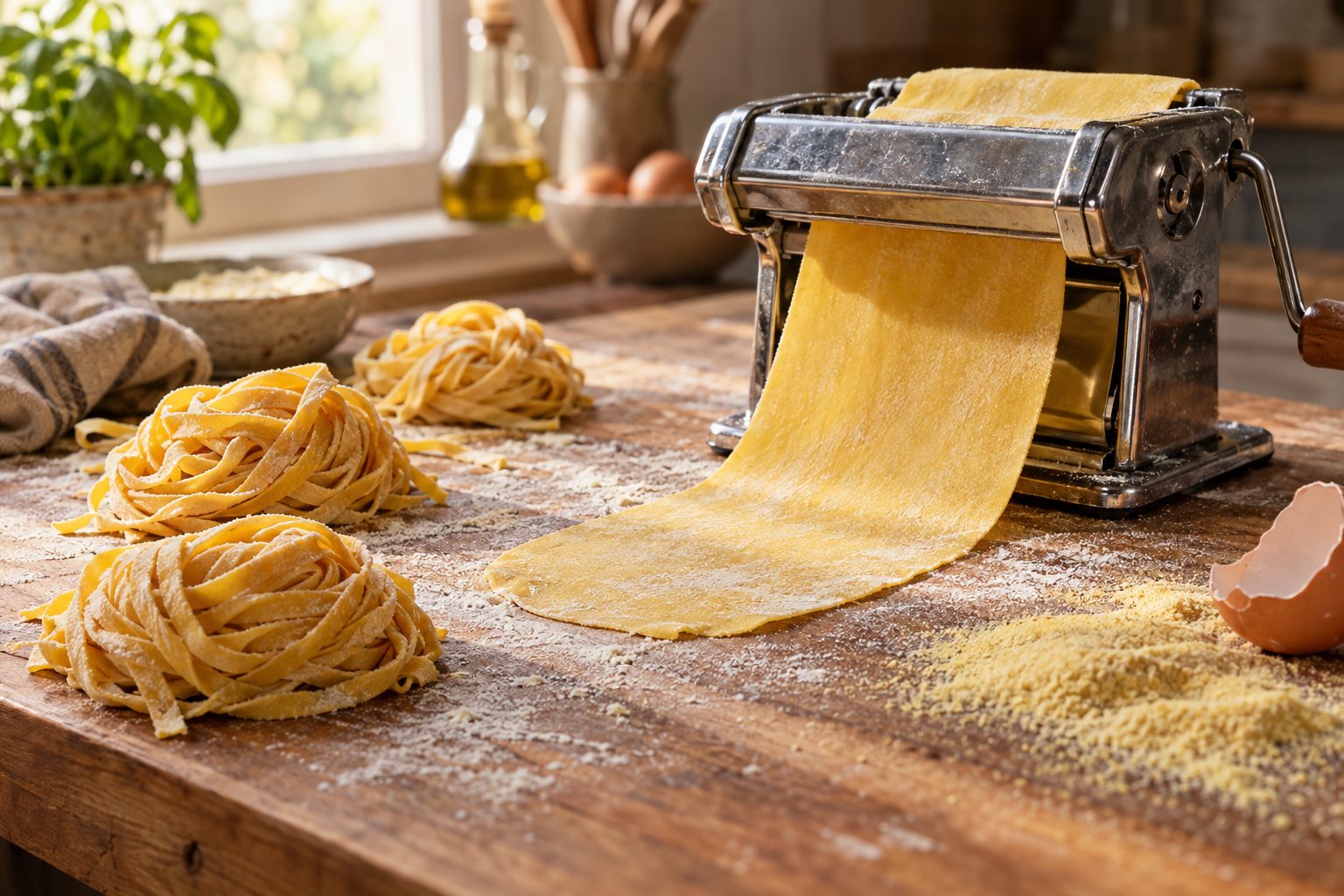
Fresh egg pasta has a slightly rough surface that grabs sauce, and it releases plenty of starch in the two or three minutes it cooks. That's why a sauce as plain as brown butter, sage, and parmesan works on fresh tagliatelle; the pasta water does the heavy lifting.
In the March 1 class we'll make the dough by hand, roll and cut it, and sauce it two ways. You'll see the moment the sauce comes together, and you won't pour that water down the drain again.
Free guide
The ten tools I'd buy before any gadget.
A short, opinionated guide to outfitting a home kitchen the way a cook would: what to spend on, what to skip, and the one pan that does most of the work. You'll also hear from me when a class opens, about once a week at most.
Thanks, there. Check your inbox.
Click the confirm button in the email from me and the guide will download right away. While you wait, the Essentials page walks through everything in it.